Most important takeaways…
- Sparrow's Lansing drive-thru lab draws blood through your vehicle window.
- Fasting depends on the ordered test, not the collection site.
- Check online check-in first: some sites skip pediatric or timed draws.
What gets drawn, how to prepare, and the skills phlebotomists need to work one

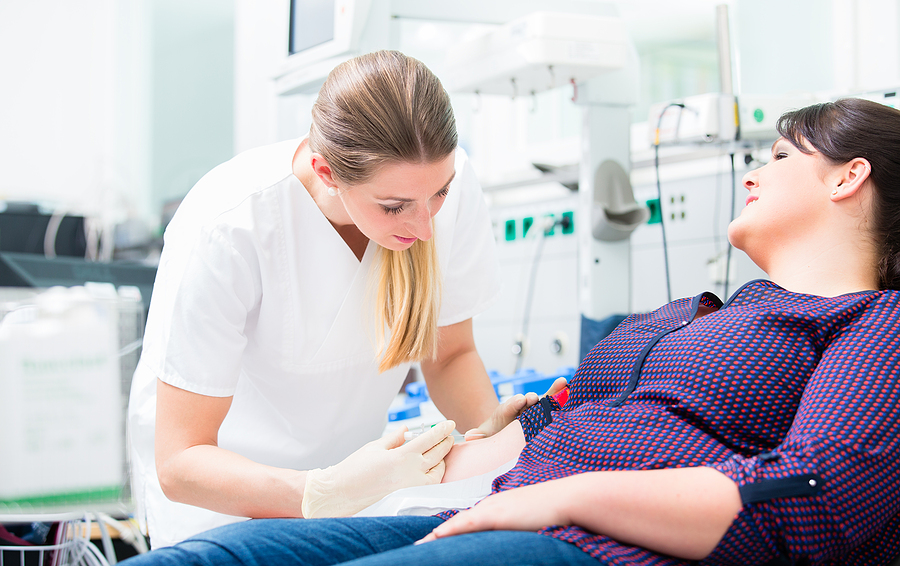
At a drive-through phlebotomy lab, a phlebotomist draws your blood through the car window, so you never walk into a lab. Sparrow's site on East Michigan Avenue in Lansing, Michigan, shows the model still running now that the pandemic response has wound down.
The tension is availability. Many sites that opened during COVID-19 have closed or narrowed their hours, and the ones that remain set their own rules on accepted orders, ages and appointments. Convenience also doesn't change prep: fasting, hydration and timing still follow the test your provider ordered.
For anyone weighing phlebotomy as a career, drive-through work is a real job held by trained, certified technicians, and one small corner of a much larger field.
Sparrow's drive-thru lab at 3131 E. Michigan Ave. in Lansing, Michigan, still runs the same way: the blood draw happens through your vehicle window1. A drive-through phlebotomy lab is a dedicated site, tent or bay where a phlebotomist collects the sample while you stay in your car. Many of these sites also collect respiratory swabs and urine specimens.
Springfield Clinic opened drive-up labs during the pandemic, including Effingham (announced Nov. 16, 2020) and downtown Springfield2. Later notices described consolidating those services, and I could not confirm a current drive-up blood-draw site. Sparrow's Frandor drive-thru stopped COVID-19 vaccines after March 18, 2022, though blood draws and testing remain listed there. Memorial Care on N. Dirksen is listed as temporarily closed.
I found no confirmed drive-through blood-draw site for Norton, Quest or Labcorp in 20263. Quest's recent Eugene, Oregon changes were ordinary draw-site closures and a new 10-station replacement, not drive-through.
Availability varies by region, and hours change. Before you drive anywhere, open the health system's own lab or scheduling page to confirm the site is active, what it collects and whether it takes walk-ups.
Convenience is the draw of a drive-through lab, but speed only helps if the sample is collected correctly. Each step protects that, because a mislabeled or mismatched tube can invalidate a result no matter how smooth the visit felt.
Start with online check-in or an appointment if the site offers one. Dress for the draw: a short or loose sleeve that pushes well above the elbow saves time and keeps the arm accessible through the window. Have your photo ID, insurance card and test order within reach.
Drawing blood for labs depends on the same standards in a car as in a clinic. Identification before the needle, correct tube order and immediate labeling are core phlebotomy skills, and they stay the same regardless of where the draw happens. If anything seems rushed, such as a missing ID check, ask the staff to slow down.
Drive-through collection works best for routine bloodwork, and even then the test menu is set location by location. This table draws on Labcorp and Quest Diagnostics pages about patient service centers and specialty collection rules, not a published drive-through menu. Use it as a general guide and confirm with the specific site before you go.
| Test or Category | Usually Collected at a Drive-Through? | Why or Special Handling |
|---|---|---|
| Complete blood count (CBC) | Often, if that site offers it | Labcorp lists CBC as routine bloodwork, but not all locations offer all services, so check the specific site before arrival. |
| Basic metabolic panel | Often, if that site offers it | Listed among Labcorp's routine blood tests. Individual site service menus may differ. |
| Cholesterol and lipid panel | Often, if that site offers it | Listed among Labcorp's routine blood tests. Labcorp warns that not all locations offer all services. |
| Thyroid panel | Often, if that site offers it | Listed among Labcorp's routine blood tests. The specific drive-through location still needs to be verified. |
| Routine physician-ordered bloodwork | Only where the site provides that service | Service availability varies by location. Confirm the location and bring your laboratory order. |
| COVID-19 antibody blood test | Possibly, though not confirmed for every drive-through site | Collected at Labcorp patient service centers, including Labcorp at Walgreens locations. Patients schedule it as Routine Labwork, so it runs through the ordinary blood-draw service. |
| Prothrombin time (PT/Protime) | Possibly, though availability is not universal | Labcorp says Protimes drawn at a patient service center before 10:30 a.m. can receive same-day results. |
| Blood collection for drug testing or therapeutic drug monitoring | Depends on the site | Labcorp offers blood collection for drug tests at many collection sites, not all of them. Confirm that the site you plan to visit can do this draw. |
| Blood cultures | Not established as a routine drive-through draw | Labcorp performs blood cultures at a regional laboratory using compatible BacT/ALERT bottles. It noted that the earlier BD BACTEC bottles were incompatible with its testing equipment. |
| STAT blood tests | No, not a general drive-through category | Quest treats STAT as a client-office service with defined geography. The test must be on the STAT menu, a pickup must be requested after collection, and STAT specimens are packaged separately. |
| Esoteric and microbiology testing | Not reliably | Labcorp says some of these tests take longer than routine tests, which points to specialized processing rather than standard routine handling. |
Fasting means going without food and drink, except plain water, for a set number of hours before your blood is drawn. Whether you need to do it depends on the test your provider ordered, not on the collection site. A car window and a walk-in chair carry the same rules.
When fasting is ordered, guidance from Quest, Labcorp and MedlinePlus generally lands between 8 and 12 hours.1 Fasting glucose is usually 8 to 12 hours, and fasting insulin is usually 8.2 A basic or comprehensive metabolic panel is often 10 to 12 hours if your provider recommends it.
Lipid panels are the tricky one. Quest says cholesterol tests usually require fasting3, and Mayo Clinic Laboratories lists 12 hours or more. Labcorp's 2026 guidance says fasting is not routinely required for most routine screening.2 Follow your order. A CBC, thyroid tests, most vitamin and mineral panels, STI tests and most hormone panels typically need no fasting.2
Plain water is allowed and encouraged.4 Skip coffee, tea (even black), juice, soda, alcohol, gum and nicotine.5 Flavored sparkling water doesn't count as water.4 Fasting far longer than instructed can skew results and make you lightheaded, so don't stretch it.
Keep taking prescribed medicine unless your provider tells you to stop.5 Labcorp says that generally includes the morning of a fasting test, though test-specific instructions can override it. Ask separately about supplements. Tell the phlebotomist about any blood thinners before the needle goes in.
Drink water in the hours beforehand, since good hydration helps veins show up and makes the draw more comfortable. Book a morning slot if you're fasting so the wait stays short. Wear a sleeve you can push up easily. Walking in without an appointment doesn't change any of this: an unscheduled visit follows the same prep as a scheduled one.
Can you just pull up to a drive-through lab, or do you need an appointment? It depends on the operator. Policies at standard draw sites give a good preview, but none of the sources cited here confirm vehicle-side collection, so check that a site actually runs a drive-through lane.
Most large lab networks accept walk-ins but prefer that you book ahead:
Hours run early and short. BayCare Trinity is open weekdays 7:00 AM to 3:00 PM plus Saturday mornings.1 Labcorp's Saint Petersburg site opens at 6:00 AM but closes by 2:00 PM. Many sites break midday and close Sundays, so check posted hours for your exact date.
Many sites set minimum ages for children. UW Medicine posts minimum ages by site: 6 at Eastside Specialty Center, 12 at UW Medical Center-Montlake, and 14 at Northwest Outpatient and Husky Health Center.2 BayCare Trinity does offer pediatric draws.1 If your child needs bloodwork, confirm the age rule before assuming a drive-through lane will take them.
A car window suits a calm adult with easy veins. Plan on an indoor draw if you:
UW Medicine requires a physician's order for all lab testing.2 Whether a site honors an order from an outside provider isn't spelled out in these sources, so call or check online before you drive over.
Is a walk-in lab, a mobile phlebotomist, or a drive-through site the better deal for a routine blood test? The answer depends on what you are paying for: the lowest published price, a draw at your kitchen table, or a few minutes in your car.
Walk-in lab sellers post the clearest cash prices. LaboratoryAssist, for example, lists a $7 all-inclusive draw fee and example tests at $6 to $7 for uninsured patients with a provider order in 44 states.1 It works with about 4,500 collection sites, but you cannot simply walk in: you order online, get a voucher, then visit. A comparison puts a CBC plus CMP at $51 with a $6 physician fee per order, while a comparable Quest panel is listed at $21 including the draw.2 Walk-In Lab requires customers to be at least 18 to order and test.3 This route suits cost-focused adults who can plan ahead.
Mobile services bring a certified phlebotomist to your home or workplace, which helps children and people who are homebound. Expect to pay out of pocket: the visit fee is typically not covered by insurance. Phlebotomy On Wheels starts pediatric draws at $1004, and Easystiks at-home draws start at $100, with free travel within 30 miles of Sacramento, California, then $1 per mile beyond.5 Pricing depends on location and the number of children.
A drive-through site is fastest when you already have an order and want to stay in the car. Published fee and eligibility details are scarce, so call the location before you go and ask what it charges, whether it accepts your order, and whether children are allowed.6 Do not assume drive-through is cheaper than a walk-in.
A drive-through blood draw is billed like any other outpatient lab visit: the test is the test, and the drive-through lane is simply where the specimen gets collected. Most insurers treat the lab work the same whether you park or walk in, and the drive-through setting itself is rarely billed as a separate service. The exceptions tend to be direct-access or mobile-style services that charge at the time of service and do not file insurance, so ask before you book.
Your plan's deductible, coinsurance and exclusions matter more than the lane. So does using an in-network lab: Quest can bill your insurer, but without proof of coverage it may require payment before collection.1 Labcorp bills from the ordering provider's information, then bills any residual patient balance separately from your provider copays.2 Insurer processing can take four to six weeks.2 Ask about a draw or visit fee, especially at mobile or urgent-care sites.
There is no single national cash price. For uninsured patients, one 2026 guide lists $15 to $50 per test through a direct lab order, $25 to $80 through a consumer lab site, and $100 to $400 per test at a hospital outpatient department.4 Labcorp offers payment plans and billing support for self-pay patients.3
Results usually go to the provider who ordered the test first, and often to a patient portal too.5 Labcorp posts to its portal and sends results to the ordering physician; common tests average 24 to 48 hours, specialty lipid panels 48 to 72 hours, hormone panels 3 to 6 days, and some genetic tests up to 21 days. Quest sends results to the physician and to MyQuest when available.1 Portal release timing varies by system, so do not assume instant access.5
Preparation follows the test ordered, and the car window just changes where the needle goes in. Whether you fast is decided by the test, not by the pickup lane.
A window draw asks more of a phlebotomist than a standard draw chair does, and none of the usual safety rules relax. If you are training for this work, expect to be judged on technique first and setting second.
You work at an awkward angle, often reaching across a door frame, so steady hands and good body mechanics matter. You also have to read veins quickly, because a patient in a car has less room and less patience than one in a clinic. Calm communication counts for a lot in a confined space. Guidance calls for patients to be seated or lying, never standing, with the arm supported and the draw area accessible.
The core practices come from CDC and WHO guidance:
Available guidance sets no standard for weather or traffic, so expect your employer to train you on its own site rules.
One laboratory procedure allows limited troubleshooting: adjust the needle slightly, confirm the tube is fully seated in the hub, or swap in another tube. It caps the same phlebotomist at two attempts before another phlebotomist steps in or a provider or nurse is notified. Accessibility rules are less settled. No complete drive-through standard exists for wheelchair users or patients who cannot reach the window. Guidance says to adapt positioning or use a safer alternate site when the vehicle cannot offer stable seating, arm support, privacy or emergency access.
The phlebotomy training and certification pages on phlebotomytraining.org cover the route in detail. Programs are typically short certificate or diploma courses of 4 to 16 weeks and 40 to 200 hours. Graduates then sit for one of the national certification exams: NHA CPT, ASCP PBT, AMT RPT or NCCT NCPT. Only California, Louisiana, Nevada and Washington license phlebotomists at state level. Elsewhere certification is voluntary, but employers expect it.
Drive-through lanes are staffed by trained, certified phlebotomists, so the path to a car-window shift is the same as for any blood draw role. Here is the order most newcomers follow.