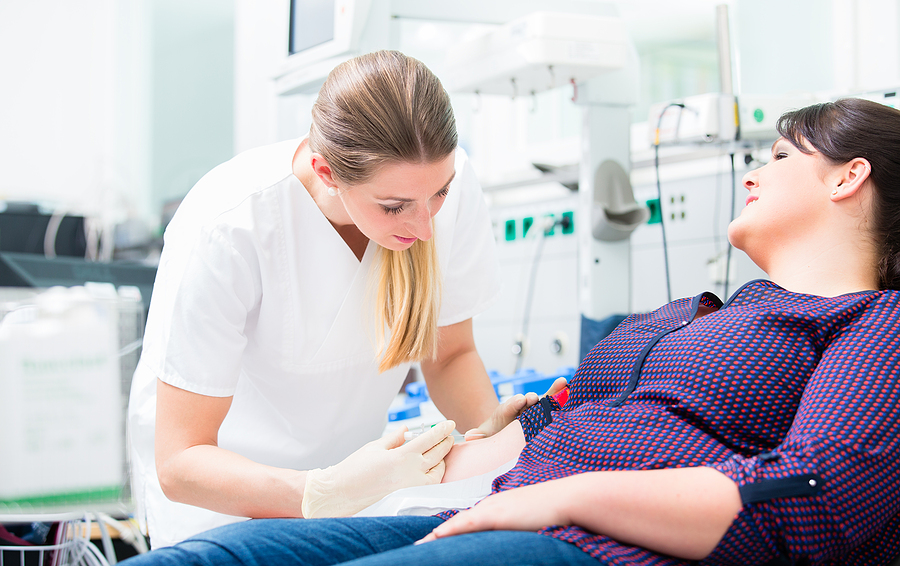
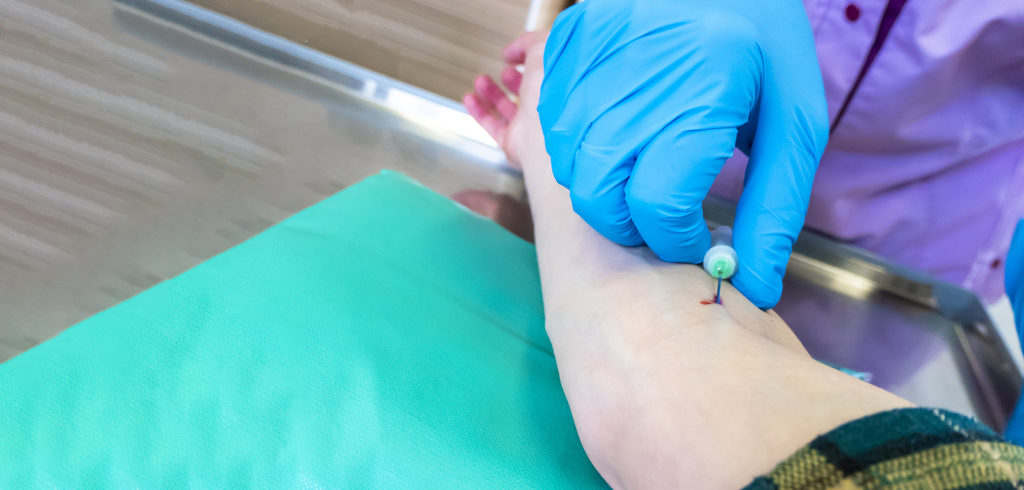
Phlebotomy training in Grand Rapids is short: a certificate or diploma of 4 to 12 weeks and 40 to 200 hours, split between classroom time and supervised draws. Tuition at West Michigan schools runs about $700 to $3,000.
Commuters from Wyoming, Kentwood and Holland weigh a familiar trade-off. A community college certificate takes a full semester and can carry financial aid; a private career center finishes in weeks and costs more per instructional hour. Both routes end at a national exam, and neither guarantees a clinical slot until you see the site list.
Hospital systems and blood centers doing the hiring weigh documented draw counts more than a school's name.
College Certificates vs. Private Training Centers in Grand Rapids
The Grand Rapids options with published details lean toward short private courses. College-based certificates typically run a full semester and may qualify for financial aid, while private centers finish faster but tend to cost more per hour of instruction. Phlebotomy Training Specialists breaks out its registration fee, textbook and supplies, and national exam fee within an all-in price, and Davenport University's online course includes an NHA exam voucher for eligible students, so confirm whether scrubs, a background check or other fees cost extra before you enroll.
Program / Provider
Type
City
Length / Hours
Tuition / Total Cost
Exam Prepared For
Northwest Phlebotomy School (Grand Rapids)
Private phlebotomy training program
Grand Rapids, MI
2 or 3 days (published class days run 10:00 a.m. to 3:00 p.m.)
$775
National certification exam (specific exam not named by the provider)
Phlebotomy Training Specialists (Grand Rapids)
Private phlebotomy training program
Grand Rapids, MI
40 clock hours
$995 all-in ($95 registration, $610 tuition, $165 textbook, supplies and equipment, $125 national exam fee)
National certification exam (certifying organization not named on the provider's page)
NHA Certified Phlebotomy Technician (CPT), exam voucher included for eligible students
Schedules: Evening, Weekend and Accelerated Options
Speed and flexibility pull in opposite directions here: the shortest program fits around a job only if its cohort times line up with your shift, while the longer hybrid option trades a few extra weeks for a steadier pace.
How long phlebotomy training takes in Grand Rapids
Phlebotomy Training Specialists - Grand Rapids publishes 3- to 5-week lengths1 depending on the schedule you pick, while Grand Rapids Community College runs 10 weeks2 for its Phlebotomy Skills for Healthcare course. Blue Heron Academy lists its phlebotomy technician course at 2 months1, but class times vary, so ask what the current meeting pattern is.
Formats each program states
Phlebotomy Training Specialists: morning, evening and weekend classes. Weekday sessions run 9:00 AM to 1:00 PM or 6:00 PM to 10:00 PM, and weekend sessions run 8:00 AM to 4:30 PM1. Total instruction is 40 hours3, split between 20 instructor-led and 20 hands-on hours.
Grand Rapids Community College: hybrid delivery, combining online lectures with in-person clinical-skills labs and live-draw practice.
Blue Heron Academy: class times vary, so confirm the current schedule directly with the school.
Clock hours versus calendar weeks
Classroom weeks are only part of the timeline. Hands-on draw practice and any externship hours sit on top of lecture time, and clinical placements typically run during weekday business hours. That means an evening or weekend student may still need daytime availability to finish draws.
Ask each school for start dates and how often new cohorts open. Short programs fill by cohort, and a missed start can push your certification back by weeks.
Hands-on Training, Clinicals and Where Students Draw
How many supervised draws will a Grand Rapids program require, and where will you actually do them? The reliable answer sits in each program's clinical handbook or externship syllabus, so ask for that document before any money changes hands. Programs here are built differently, and the differences matter more than any headline hour count.
What the Published Details Show
Kent Career Technical Center lists about 110 hours and covers venipuncture, dermal punctures, capillary-tube collection, smears and blood typing. Phlebotomy Training Specialists lists 40 in-class hours, 20 of them hands-on, with half of classroom time spent on blood draws. Northwest Phlebotomy School runs a two- or three-day course with live draws starting on day two. Pima Medical Institute lists 160 externship hours, but confirm which campus serves your commute. Treat these as starting points, not requirement totals.
Questions to Ask Admissions and Clinical Coordinators
Draw minimums: What is the minimum number of supervised venipunctures and capillary sticks, and which of those count toward completion?
Documentation: Do practice draws on classmates or simulation arms count, or only documented draws on patients or donors?
Hours and supervision: How many total externship or hands-on hours are required, and who supervises each draw?
Placement: Does the program assign your clinical site, or do you find one yourself?
Clearances: Which background checks, immunizations, drug screens or health forms must be finished before your first day on site?
Verification: How is completion signed off, and what paperwork do you receive for an exam application or an employer?
Sources Worth Checking
Start with the program's own website and written materials. BLS.gov gives occupation and training context. NAACLS and other accreditor directories show whether a program is accredited. Professional bodies such as ASCP, ASCLS, NHA and AMT publish exam eligibility rules. None of these will reliably name the local sites where students draw, so don't expect them to settle that question.
Confirming Where Students Really Draw
Ask each program for its current clinical affiliation list in writing. Then check it independently. Contact the education or student-placement office at the hospital, laboratory or blood center named, and ask whether it currently accepts phlebotomy students from that program. Affiliations change, and a site that hosted students two years ago may not today.
If a program won't share a list or can't state its draw requirements, treat that as useful information. Don't rely on a site name or a draw count you heard secondhand, including from this page. Get it from the program, in writing, and confirm it with the site.
Certification Exams and Michigan's Rules
A phlebotomy certification exam is a national test run by a credentialing body, not your school, and it shows you can draw blood safely and handle specimens correctly. Michigan does not license phlebotomists at the state level, so certification is voluntary here but expected by most Grand Rapids employers. The Michigan state page covers the statewide rules in more detail.
Step 1: Know the Four Main Credentials
Michigan employers broadly accept four national certifications: NHA CPT, ASCP PBT, AMT RPT and NCCT NCPT. ASCP's PBT application fee is $155 in 2026.1 One eligibility route asks for a high school diploma or its equivalent plus a NAACLS-approved phlebotomy program completed within the last five years.1 NHA's CPT fee is listed at $134 for 2026, though published figures differ, so confirm the current price before you budget.
Step 2: Ask Each Program Directly
Some programs teach phlebotomy without preparing students for any of these exams. Some include the exam fee in tuition, and others bill it separately. Call or email admissions with these questions:
Exam: "Which national certification exam does your curriculum prepare me for?"
Fee: "Is the exam fee included in tuition, or do I pay it separately?"
Approval: "Is the program NAACLS-approved, and is the school accredited or state-licensed? By whom?"
Get the answers in writing. An email or the official catalog page carries more weight than a verbal promise if a fee or eligibility question comes up later.
Step 3: Verify Against Official Sources
Exam rules and fees: the NHA, ASCP, AMT and NCCT certification pages
Program approval: the NAACLS program directory
School accreditation or licensing: the U.S. Department of Education's DAPIP database or Michigan LARA
Career context: the BLS Phlebotomists occupational profile
Use BLS for background on the job itself, including duties, pay and outlook. It cannot tell you whether a specific school prepares you for an exam or covers the fee. Pair it with the school's own pages and the certifying body's requirements before you enroll.
What Grand Rapids Programs Require Before You Enroll
College certificates usually ask for more academic paperwork up front. Adult-education routes focus on readiness and support. Either way, most clearances must be finished before your first clinical draw.
Age and ID
Expect a minimum age of 18. Kent ISD's adult program requires applicants to be 18 by July 1 of the program year. It also asks for photo ID and proof that you are authorized to work in the U.S.
Diploma or GED
GRCC expects a high school diploma or GED. Kent ISD does not list one as mandatory and gives priority to adults close to finishing a GED or diploma.
Background check and drug screen
GRCC health programs charge $10 for a preliminary background check before waiting-list placement and require fingerprinting before clinicals. Kent ISD verifies a background check before final placement. Drug screens are often set by clinical sites, so ask each program.
Immunizations
Clinical sites commonly ask for hepatitis B, MMR, varicella, Tdap, an annual flu shot and TB screening. Some sites also require a COVID-19 vaccine.
CPR/BLS
Some programs require CPR or BLS before clinicals. Confirm this before you enroll.
Testing and orientation
GRCC uses math and reading admission tests. Kent ISD recommends a recent reading score and requires an Adult Learning Plan and soft-skills modules before training starts.
Paying for Phlebotomy Training in West Michigan
Most of the work is matching a modest tuition bill to the right funding source. Michigan phlebotomy programs currently run about $700 to $3,000 for four to twelve weeks. Treat that as tuition only: exam fees for the NHA CPT, ASCP PBT, AMT RPT or NCCT NCPT, plus supplies, a background check and a CPR card, sit on top.
WIOA Funding Through Michigan Works!
Michigan Works! offices in West Michigan and Kent County administer WIOA training funds that can pay a school directly through an Individual Training Account. The money is not automatic. You need a program on the state's Eligible Training Provider List, phlebotomy designated as in-demand by the local board, an eligibility assessment and an Individual Employment Plan. Register on Pure Michigan Talent Connect first, then bring photo ID, Social Security card, proof of income and work authorization to intake. Expect three to eight weeks between your first appointment and a funded seat.1 If tuition exceeds the local cap, Pell Grants, state aid or a school payment arrangement can cover the difference.
Payment Plans, Aid and Scholarships
Phlebotomy Training Specialists advertises three payment methods, including an in-house pay-as-you-go plan; ask about deposit, installment terms and any fees before signing. Federal aid applies only where the specific school and program are eligible, so confirm before counting on it. Grand Rapids Community College students training to collect blood donations may qualify for Versiti Phlebotomy Skills Scholarships; ask GRCC for the current amount and deadline.2 West Central Michigan Works! Youth Services can fund short-term phlebotomy training for eligible young people in its service area, and on-the-job training agreements there may reimburse up to half a trainee's wages.3 None of this is guaranteed, and no program here should be assumed free, so apply early.
How Do You Get From Your First Class to Your First Phlebotomy Job in Grand Rapids?
Most Grand Rapids students follow the same order, whether they pick a college certificate or a private training center. Each step below ties back to a section above, so use this as a quick map of the whole process.
Phlebotomist Pay in the Grand Rapids Area
These figures come from the U.S. Bureau of Labor Statistics Occupational Employment and Wage Statistics survey for 2025, so they reflect recent reported pay rather than what employers are offering in 2026. They cover every phlebotomist working in the Grand Rapids-Wyoming-Kentwood metro area, not graduates of any one program, and starting pay for a new certificate holder usually sits closer to the lower end of the range. Half of local phlebotomists earned between $37,100 and $44,390 a year, with a median of $38,360.
Measure (Phlebotomists, BLS 2025)
Grand Rapids-Wyoming-Kentwood, MI
Total employment
520
25th percentile annual wage
$37,100
Median annual wage
$38,360
Mean annual wage
$41,230
75th percentile annual wage
$44,390
Classroom hours get you started, but documented, supervised blood draws are what make a Grand Rapids graduate eligible to sit a national certification exam and ready for an employer to hire.
phlebotomytraining.org
Phlebotomy Training Programs Accepting Students Near Grand Rapids, MI
9 schools in the state offer this course through an education partner, with open enrollment and a national certification exam voucher. Request information to hear from the school directly.
Certified Phlebotomy Technician course (vouchers and lab included)
Sponsored listings. These schools offer the course through an education partner and may compensate us when you request information. Compensation does not affect the rankings or the directory on this page.
Every Phlebotomy Training Program Near Grand Rapids, MI
15 schools, grouped by city. Select a program to see its highlights, and use the Website link for the school's own program page.
Ann Arbor, MI
Washtenaw Community College
Certificate/Diploma - Phlebotomy Fundamentals and Certification
Program data from the schools and the National Center for Education Statistics (IPEDS).
Grand Rapids Phlebotomy Training FAQ
Quick answers to the questions Grand Rapids students ask most. Details vary by program, so confirm specifics with the school and the certifying body before you enroll.
How long does phlebotomy training take in Grand Rapids?
It depends on the format. Northwest Phlebotomy School advertises a two- or three-day course, Phlebotomy USA lists 40 hours, Grand Rapids Community College runs a 10-week program, and Blue Heron Academy offers a two-month program. Davenport University's online course is 200 hours over 12 months. Broader certificate programs often take 4 to 12 weeks.
Are there accredited phlebotomy training programs in Grand Rapids?
Grand Rapids Community College holds institutional accreditation from the Higher Learning Commission, but that does not by itself show its phlebotomy program has separate accreditation. Northwest Phlebotomy School says its curriculum is approved by NRAHP. Always verify the program's accreditation, clinical requirements, and exam eligibility before paying.
Do I need to be certified to work as a phlebotomist in Michigan?
Michigan has no state phlebotomy license, but employers expect national certification. See the Michigan state page for the full rules.
Can I retake a national exam if I fail, and does my program help with exam prep after graduation?
Retake rules differ by certifying organization and exam, so check the policy, waiting period, and fee with the certifying body before you test. Program support also varies. Davenport says its course prepares students for the NHA exam, but ask any school whether prep help continues after you finish.